
SEO Architecture for Next.js Enterprise Websites
Why SEO Architecture Matters
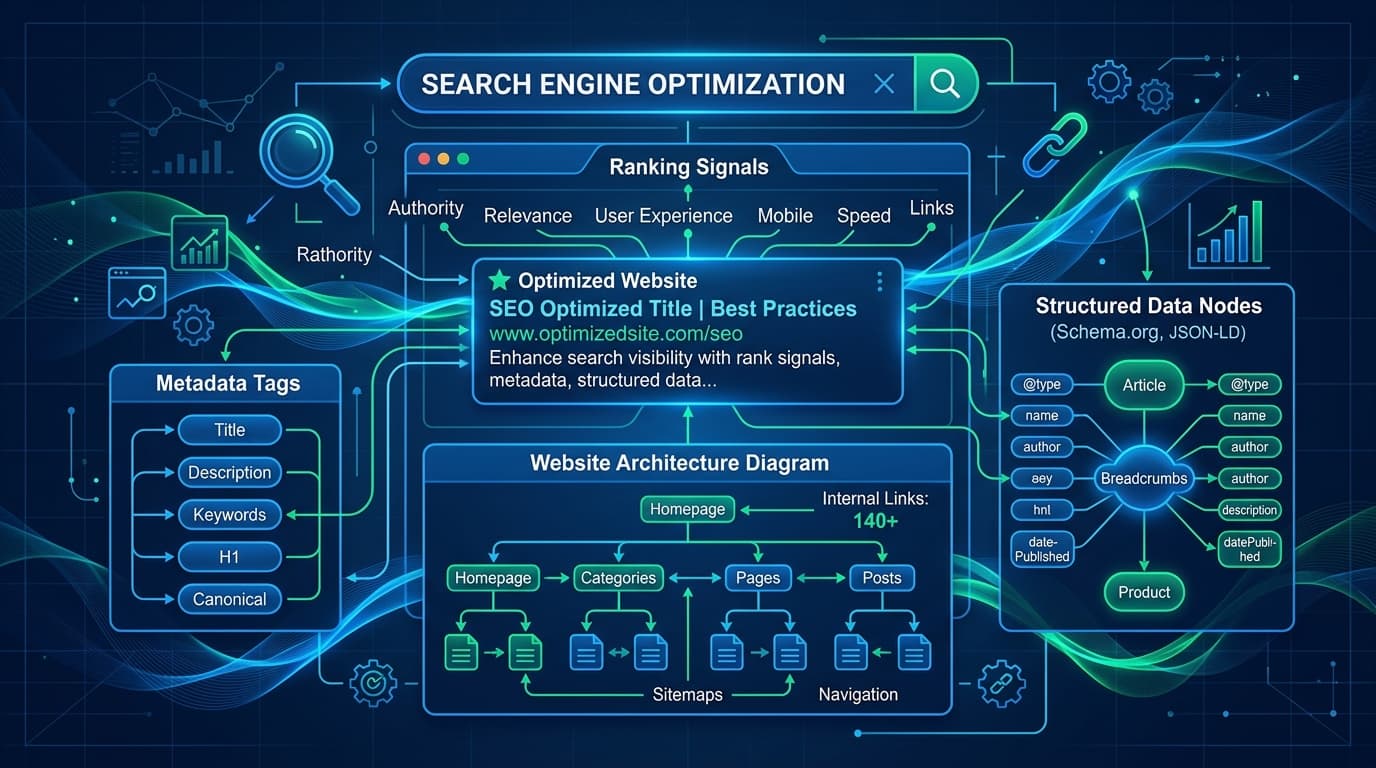
In an enterprise context, your website isn't just a marketing asset—it is a revenue driver. And revenue-driving websites are findable. SEO architecture ensures that search engines can discover, crawl, index, and rank every important page on your site.
The Four Pillars
1. Route Structure
Clean, semantic URLs are foundational. Avoid query-parameter-based routing — search engines strongly prefer path-based URLs.
2. Metadata Generation
Every page needs a unique title and meta description. Use the generateMetadata function to produce these dynamically:
- Title formula: Page Title | Brand Name
- Description: 150–160 characters summarising the page's value proposition
- Open Graph and Twitter Card tags for social sharing previews
3. Structured Data (JSON-LD)
Schema.org structured data helps search engines understand your content type:
- Article schema for blog posts (author, publishedDate, headline)
- Organisation schema for the homepage
- Product schema for product pages
- BreadcrumbList for navigation context
4. Internationalisation & Hreflang
For multilingual sites, hreflang tags tell search engines which locale variant to serve. Ensure your sitemap includes all locale variants and that x-default points to your primary locale.
Technical Checklist
- Canonical URLs on every page to prevent duplicate content
- XML sitemap generated at build time
- robots.txt with appropriate allow/disallow rules
- Fast Core Web Vitals (LCP < 2.5s, CLS < 0.1, INP < 200ms)
- Server-side rendering for all public pages
Conclusion
SEO isn't an afterthought—it is architecture. Building it into the foundation of your Next.js site ensures every new page you ship is immediately discoverable and competitive in search.
