
The Business Case for AI-Powered Customer Support Chatbots
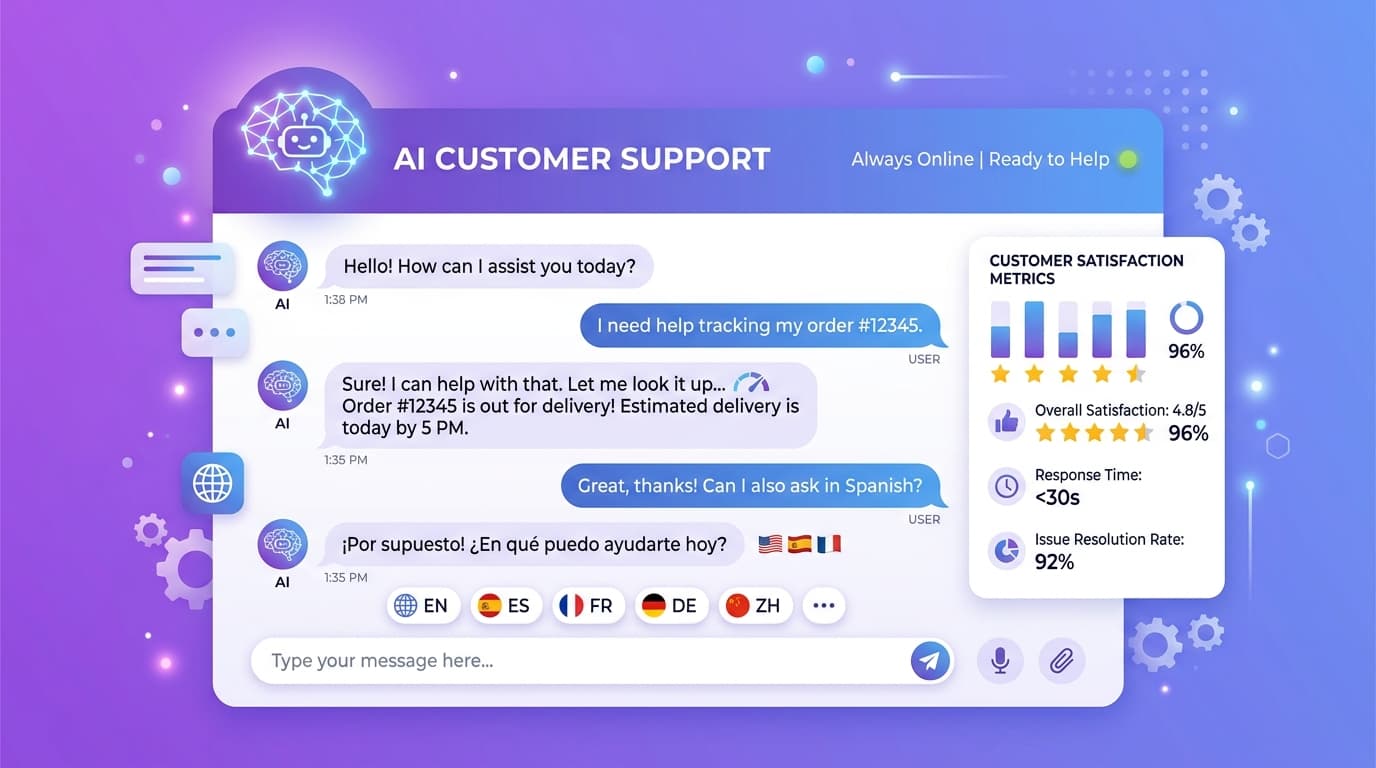
Beyond the FAQ Bot
Early chatbots were glorified search bars—capable of matching keywords to canned responses and little else. Modern conversational AI is fundamentally different.
Powered by large language models (LLMs), retrieval-augmented generation (RAG), and enterprise knowledge bases, today's chatbots understand context, handle multi-turn conversations, and resolve complex queries end-to-end.
Key Capabilities
Natural Language Understanding
Modern chatbots don't rely on intent classification trees. They understand free-form text, handle typos and slang, switch between topics mid-conversation, and disambiguate vague requests.
Knowledge-Grounded Responses
Using RAG architecture, the chatbot retrieves relevant information from your knowledge base (product docs, support articles, policy documents) and generates responses grounded in verified content—not hallucinated answers.
Action Execution
Beyond answering questions, AI chatbots can:
- Look up order status in your OMS
- Create support tickets in your CRM
- Process return requests
- Schedule appointments
- Escalate to human agents with full conversation context
Multilingual Support
LLM-based chatbots handle 50+ languages without separate training per language. A customer can start a conversation in Hindi and switch to English mid-sentence.
The ROI Numbers
Enterprise deployments typically show:
- 45–65 % deflection rate — queries resolved without human agent involvement
- 24/7 availability — no staffing gaps during off-hours, weekends, or holidays
- 30 % lower cost-per-interaction compared to human-only support
- 15 % improvement in CSAT scores due to instant response times and consistent quality
Implementation Considerations
- Data Privacy: Ensure the chatbot does not expose PII. Use role-based data access and redact sensitive fields.
- Guardrails: Implement output filters to prevent off-topic, harmful, or misleading responses.
- Human Escalation: Always provide a clear path to a human agent. The best chatbots know when they don't know.
- Continuous Improvement: Log conversations, identify failure modes, and retrain regularly.
Getting Started
A phased approach works best:
- Start with a single channel (website chat or WhatsApp).
- Connect to your top 3 most-accessed knowledge sources.
- Monitor deflection rates and customer satisfaction for 30 days.
- Expand to additional channels and knowledge bases.
The technology is mature. The question is no longer "should we deploy a chatbot?" but "how quickly can we deploy it right?"
