
Why Modern Enterprises Are Replacing Legacy ERP with Intelligent Platforms
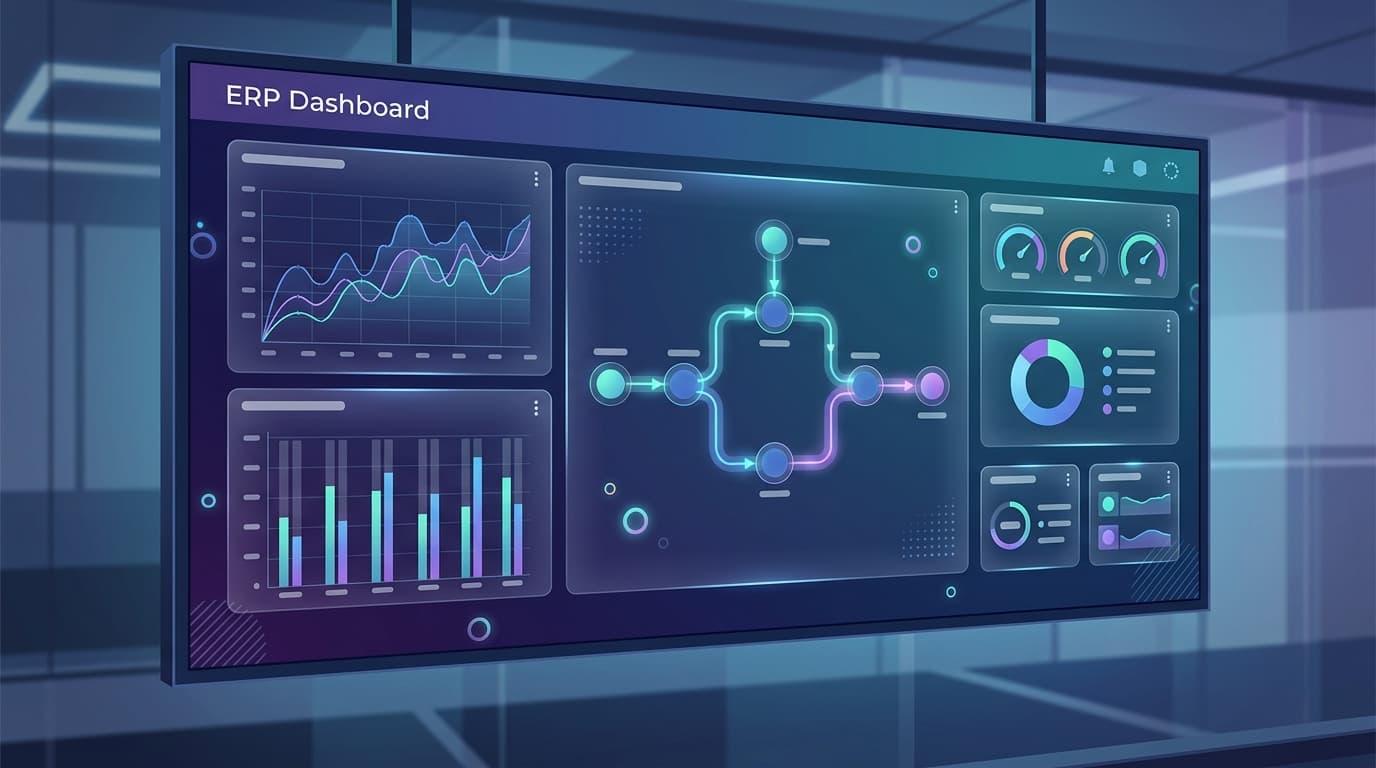
The Hidden Cost of Legacy ERP
For decades, ERP systems served as the digital backbone of enterprises. But in an era defined by AI, cloud computing, and hyper-connectivity, legacy ERP has become a bottleneck rather than a bridge to growth.
Companies running outdated systems face escalating maintenance costs—often consuming 60–70 % of IT budgets—while simultaneously struggling to integrate new data sources and customer-facing applications.
What Makes an ERP "Intelligent"?
An intelligent ERP platform goes beyond basic resource planning. It incorporates:
- Machine Learning Pipelines that forecast demand, detect anomalies, and optimise inventory levels automatically.
- Unified Data Lakes that consolidate information from finance, HR, supply chain, and CRM into a single source of truth.
- Low-Code Customisation so business users—not just developers—can build workflows and dashboards.
- Real-Time Analytics embedded directly into daily workflows, eliminating the lag between data collection and decision.
The Migration Path
Moving away from a legacy ERP doesn't have to mean a risky "big bang" migration. Modern approaches favour:
- Modular Adoption — replacing one functional module at a time (e.g., procurement first, then finance).
- API-First Architecture — ensuring the new system can coexist with existing tools during the transition.
- Parallel Running — operating both systems side-by-side for a validation window before cutting over.
Real-World Impact
Organisations that have transitioned to intelligent ERP report an average 35 % reduction in manual data entry, 22 % faster month-end closes, and a significant improvement in supply-chain visibility.
"The move to an intelligent ERP wasn't just an IT project—it was a strategic pivot that reshaped how every department operates." — CIO, mid-market manufacturing firm
Key Takeaways
- Legacy ERP drains budgets and limits agility.
- Intelligent platforms blend AI, analytics, and low-code tools.
- A phased, API-first migration minimises risk.
- The ROI extends well beyond IT efficiency—it transforms the entire business.
